




Why I Do This Work
Hi, my name is Miranda Elizabeth Campos, and for the last year and a half I’ve been working with Second Chance Tucson, helping share resources and build collaboration in our reentry community. I want to tell you a little about why this work means so much to me.
.jpg)
My Story
I grew up on the south side of Tucson and started “getting in trouble” very young. I went through things no kid should have to go through, and I turned to drugs and alcohol to cope. When I was thirteen, my parents—concerned and trying to help—sent me to what they thought was a youth rehab. It turned out to be a harmful, predatory “troubled teen” program that was more focused on monetary gain from worried parents than on healing the trauma experienced by youth. I had previous sexual assault, and in the “group” I was taught to feel ashamed and take responsibility for dressing provocatively and “putting myself in those situations.” The rehab was led by untrained former peers, built on unethical practices that never once addressed the trauma underneath my substance use. We were children—many of us carrying heavy stories—and instead of care, we were manipulated and wounded further.


"The Group is a feature-length documentary that retraces the director's five year journey through the world of adolescent drug abuse programs. Through interviews with former members, archival photographs and expert witnesses, The Group tells the often personal story of the young people affected by the organization, their struggles with addiction and life after The Group."
***Survivors, current members and parents visit this link for help: Enthusiastic Sobriety Abuse Alliance, Inc. is a volunteer based, survivor-lead nonprofit organization.***
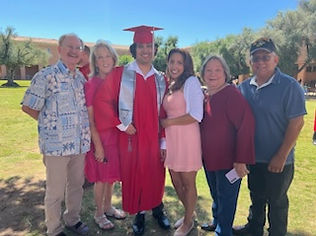
Even in the middle of all of that, I met some of the most important people in my life, including my son’s father, Josh. We were two brown kids in a predominantly white, upper-class rehab on the east side, just trying to survive a system that didn’t understand us and didn’t care to. He was my best friend the second we met. We left that program still unhealed, still using, and that led to arrests, charges, and the start of a long corrections journey for Josh. I learned very early how a single decision, a single night, can follow you on paper for the rest of your life, even when the story behind it is much more complicated. When I was twenty, I got pregnant. I loved Josh, but I loved my son more. I set a boundary: if he chose crime and chaos, he wouldn’t come in and out of our child’s life. That was a painful decision, and I held that line. I stayed in frequent touch with him over the years while he was inside, but ( beside seeing him twice at a couple weeks old) he never met or spoke to our son. Josh's parents—my son’s grandparents—have always stayed in our lives with constant love and support that I am sincerely grateful for.

Youre still my boy Blue💙
.jpg)
.jpg)


For years, from the outside, my life might have looked okay: I was raising my amazingly sweet son, working in a bookstore, going to college. But I was living with chronic physical pain from an injury, unhealed emotional trauma, and I was frequently drinking alone to get through the days. I was functioning… but inside I was barely hanging on. In 2020, everything shifted. Josh died in a fire. The world was shutting down for COVID. I was in graduate school for criminal justice, and suddenly my grief and my studies collided. That summer, I started an internship with a new reentry resource platform. The idea was beautiful: connect people coming out of prison with organizations ready to help. It felt like the perfect way to honor Josh and help our peers. He was gone and I couldn’t do anything to help him but the system he’d spent years in was still here. And so were all the people coming home, trying to rebuild their lives. Maybe I could help them? I poured myself into it—researching, mapping services, building relationships with reentry organizations across Arizona. But over time, I felt deeply misaligned, burned out, and unheard, and my drinking got worse. It finally took me to detox, twice—once in a hospital on Thanksgiving and once in a recovery center that December 2022.

I am fortunate that those places, and the people there, treated me with dignity. Sitting in groups with others who understood addiction and trauma as responses to pain—not moral failures or character flaws—changed my life. They saw me and held space for me at the worst time of my life. They were kind.
This December 30th, 2025 I will have three years alcohol-free. And what I’ve learned is this: healing doesn’t happen in isolation. It happens in community. When I left my job and didn’t know where I fit anymore, Second Chance Tucson and the local reentry community opened a door. Judge Pyle and others welcomed me in, not as a problem to fix, but as a partner—with lived experience, skills, and a heart for people.

Through SCT and the Pima County Reentry Coalition, I get to help build something that feels different:
• A caring community of organizations and people that collaborate and share resources freely—no-strings-attached help. •Trauma-informed peer-to-peer relationships that highlight justice-impacted voices and create a community where compassion and accountability can exist together—fostering empathy, empowerment, and sincere transformation.
I know what it’s like to love someone who’s been incarcerated, to spend years waiting and hoping for good outcomes, and to lose them.
I know what it’s like to be labeled, judged, violated, addicted, lied to and hurt by those you trusted, …and still desperately trying to find your light again.
And by the grace of God, I also know what it’s like to finally find your spark and receive real help and support from community when it’s needed most.
That’s why I believe so deeply that reentry is our shared community project and collaboration of resources and wisdom is key. When we show up with peer support, pathways to housing and employment, and spiritual and emotional care, we’re not just helping one person; we’re changing what’s possible for their children, their families, their neighborhoods, and our whole city. If you’re interested, I invite you to join us—learn more, share this message, support Second Chance Tucson or join the Pima County Reentry Coalition and help us build a safe community where people feel welcomed & heard.
I hope my story was able to give you a background of why I am so passionate about the work I do. I've been there, and if I can help someone find the way back, I'm gonna keep shining my light as bright as I can ✨ Thank you for listening 🤍